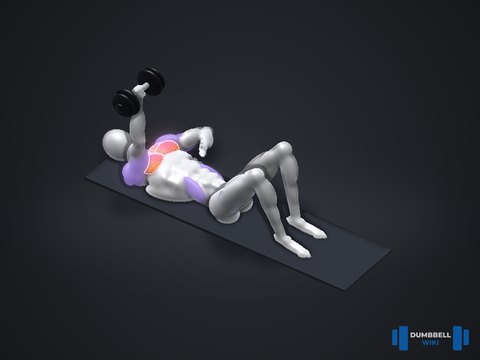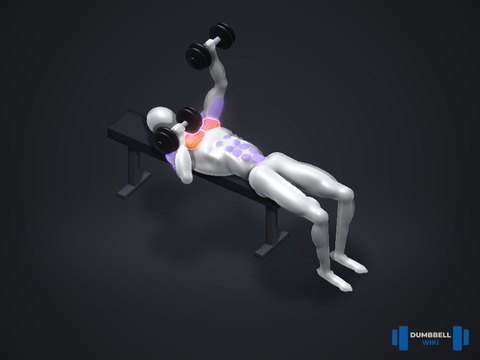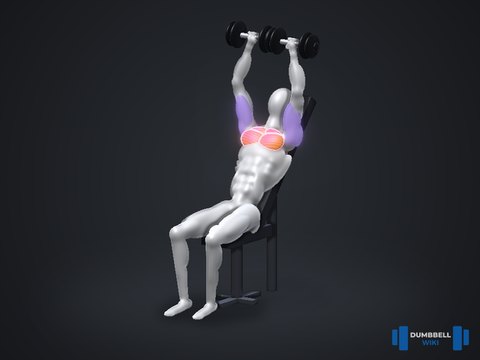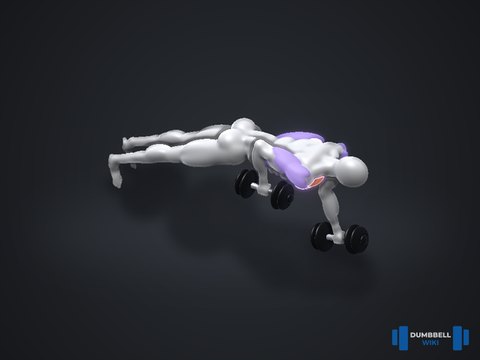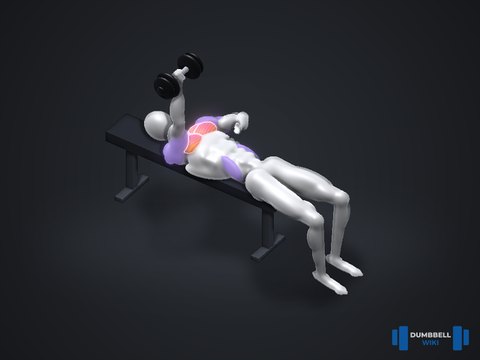

Flat Dumbbell Fly
The flat dumbbell fly is a intermediate isolation exercise that mainly works the chest, with help from the shoulders and biceps.
A chest isolation exercise in which straight-ish arms open wide and close over the chest in a hugging arc.
Primary musclesChest
Secondary musclesShoulders, Biceps
Level · TypeIntermediate · Isolation
EquipmentDumbbells, flat bench
Suggested volume: 3 sets of 10–15 reps
 Coming soon3D exercise demo
Purpose of the flat dumbbell fly
The fly isolates the pectorals by moving the arms through horizontal adduction while the elbows stay softly bent. Because the chest is stretched under load at the bottom, it complements pressing exercises and helps build chest size, especially when done with light weights and a slow lowering phase.
How to do the flat dumbbell fly: step by step
- Lie on a flat bench with a dumbbell in each hand, arms extended above your chest and palms facing each other.
- Soften your elbows into a slight bend and keep that angle throughout.
- Open your arms wide in an arc, lowering the dumbbells until you feel a stretch across your chest.
- Stop when your upper arms are roughly level with your torso.
- Squeeze your chest to bring the dumbbells back together over your chest, as if hugging a tree.
Flat Dumbbell Fly benefits
- Isolates the chest with little triceps involvement
- Loads the chest in a deep stretch
- Improves mind-muscle connection with the pecs
- Works well as a finisher after presses
Common flat dumbbell fly mistakes
- Bending and straightening the elbows, which turns it into a press
- Lowering too deep and straining the shoulders
- Using weights too heavy to control at the bottom
Flat Dumbbell Fly progressions
- Easier: new to this movement? Start with the incline dumbbell bench press and neutral-grip dumbbell press.
- Harder: once you own the flat dumbbell fly, progress to the standing dumbbell fly and dumbbell push-up row.
- See all dumbbell chest exercises.
Flat Dumbbell Fly FAQs
Fly or press: which is better for chest size?
Presses build more overall strength and mass. Flys add focused stretch and isolation. Most effective chest programmes use both.