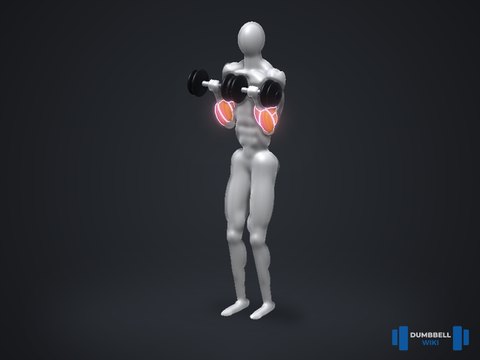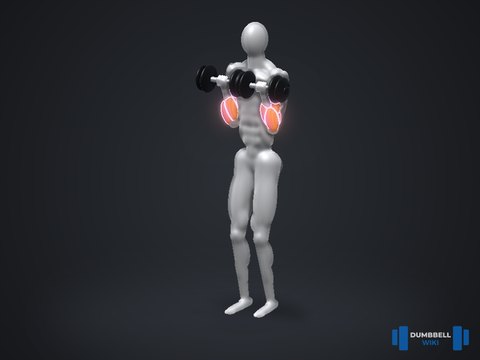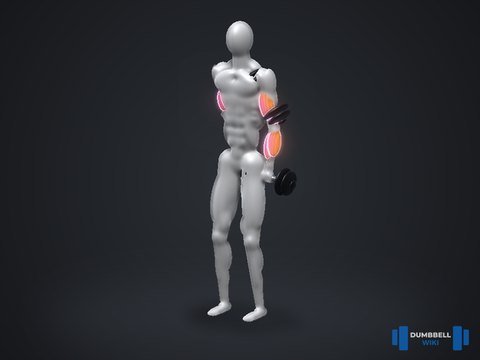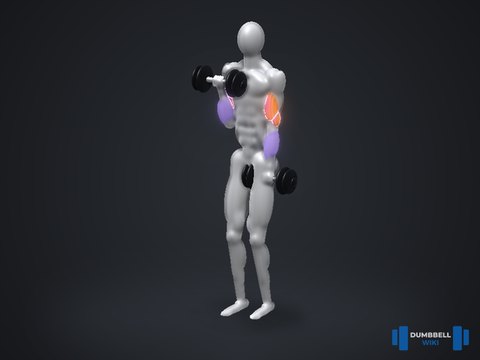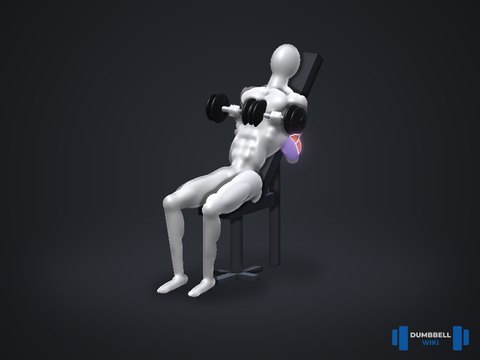

Dumbbell Hammer Curl
The dumbbell hammer curl is a beginner isolation exercise that mainly works the biceps and forearms.
A neutral-grip curl that emphasises the brachialis and brachioradialis for thicker arms and stronger forearms.
Also known as: Hammer Curl
Primary musclesBiceps, Forearms
Secondary muscles—
Level · TypeBeginner · Isolation
EquipmentDumbbells
Suggested volume: 3 sets of 8–15 reps
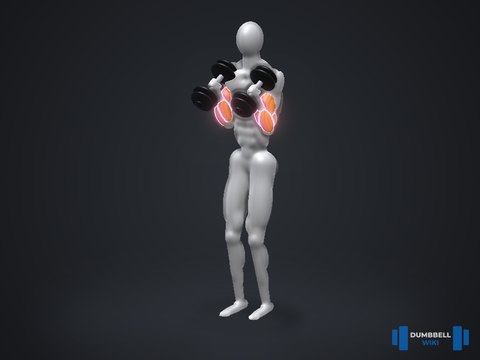 Coming soon3D exercise demo
Purpose of the dumbbell hammer curl
The hammer curl is a curl with the palms facing each other (a neutral grip). This grip shifts more work to the brachialis and the brachioradialis in the forearm. It builds arm thickness, improves grip and is often more comfortable on the wrists and elbows than a standard curl.
How to do the dumbbell hammer curl: step by step
- Stand tall with a dumbbell in each hand at your sides, palms facing your thighs.
- Keep your elbows tucked into your sides and your wrists straight.
- Curl the dumbbells up toward your shoulders, keeping your palms facing each other the whole time.
- Pause and squeeze at the top.
- Lower the dumbbells under control to full arm extension and repeat.
Dumbbell Hammer Curl benefits
- Builds the brachialis and brachioradialis for thicker arms
- Strengthens the forearms and grip
- Wrist-friendly neutral grip
- Complements standard curls for complete arm development
Common dumbbell hammer curl mistakes
- Rotating the wrists during the lift
- Using momentum from the hips
- Letting the dumbbells crash down on the way back
Dumbbell Hammer Curl progressions
- Harder: once you own the dumbbell hammer curl, progress to the reverse dumbbell curl and incline dumbbell curl.
- See all dumbbell bicep exercises.
Dumbbell Hammer Curl FAQs
Hammer curl vs bicep curl: which is better?
They complement each other. Standard curls emphasise the biceps brachii, while hammer curls put more load on the brachialis and forearms. Including both gives fuller arm development.