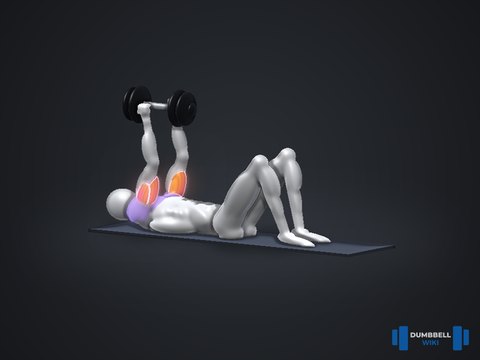

Tate Press
The tate press is a intermediate isolation exercise that mainly works the triceps, with help from the chest.
A lying triceps exercise where the elbows flare out and the dumbbells tip down to touch the chest.
Primary musclesTriceps
Secondary musclesChest
Level · TypeIntermediate · Isolation
EquipmentDumbbells, flat bench
Suggested volume: 3 sets of 10–12 reps
 Coming soon3D exercise demo
Purpose of the tate press
Named after powerlifter Dave Tate, the Tate press targets the medial and lateral heads of the triceps, which drive the lockout in pressing. The unusual elbows-out path makes it a great accessory for bench press strength.
How to do the tate press: step by step
- Lie on a bench with the dumbbells pressed above your chest, palms facing your feet.
- Point your elbows out to the sides.
- Bend your elbows so the dumbbells tip in and lower to touch your chest.
- Keep your upper arms still.
- Extend your elbows to push the dumbbells back up.
Tate Press benefits
- Targets the lateral and medial triceps heads
- Builds lockout strength
- Low shoulder stress
- Unique stimulus
Common tate press mistakes
- Letting the upper arms drop
- Using too much weight
- Banging the dumbbells on the chest
Tate Press progressions
- Easier: new to this movement? Start with the dumbbell floor press (close grip) and dumbbell triceps kickback.
- Harder: once you own the tate press, progress to the incline skull crusher and dumbbell jm press.
- See all dumbbell tricep exercises.
Tate Press FAQs
Who should do the Tate press?
Anyone wanting stronger lockouts. Use light to moderate weights and strict control.