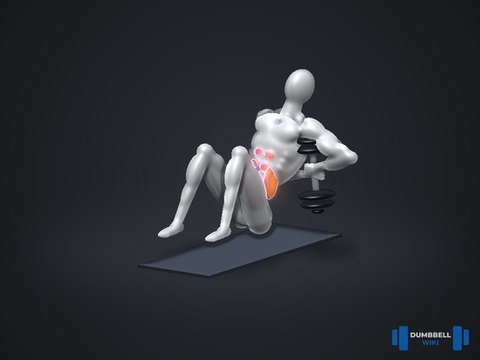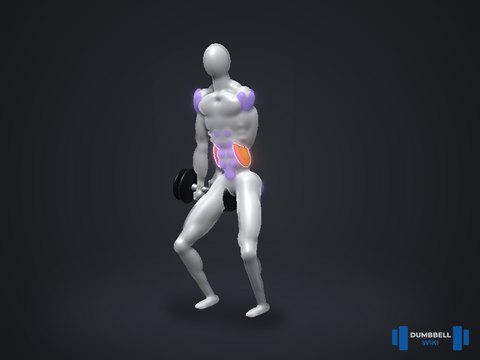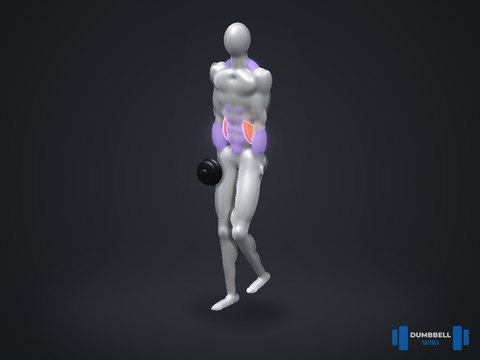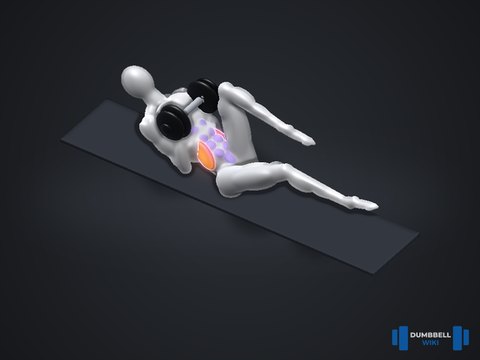

Dumbbell Side Bend
The dumbbell side bend is a beginner isolation exercise that mainly works the obliques, with help from the lower back and abs.
A standing oblique exercise that bends the torso sideways against the weight of a single dumbbell.
Also known as: Single-Arm Dumbbell Side Bend
Primary musclesObliques
Secondary musclesLower back, Abs
Level · TypeBeginner · Isolation
EquipmentOne dumbbell
Suggested volume: 3 sets of 12–15 reps per side
 Coming soon3D exercise demo
Purpose of the dumbbell side bend
The dumbbell side bend trains the obliques and the quadratus lumborum by bending the trunk to the side and pulling it back upright. Holding the weight in one hand also trains the muscles on the opposite side to resist leaning, which is useful for carrying loads on one side.
How to do the dumbbell side bend: step by step
- Stand tall with feet hip-width apart, holding a dumbbell in one hand at your side.
- Place the other hand on your hip or behind your head.
- Slowly bend sideways toward the dumbbell, letting it slide down the side of your leg.
- Go only as far as you can without twisting or leaning forward.
- Use the obliques on the opposite side to pull yourself back upright. Complete all reps, then switch sides.
Dumbbell Side Bend benefits
- Strengthens the obliques and lateral core
- Improves resistance to sideways bending under load
- Supports carrying bags and objects on one side
- Simple and quick to learn
Common dumbbell side bend mistakes
- Twisting the torso or leaning forward
- Holding dumbbells in both hands, which cancels out the load
- Moving too fast and using momentum
Dumbbell Side Bend progressions
- Harder: once you own the dumbbell side bend, progress to the dumbbell russian twist and dumbbell reverse woodchopper.
- See all dumbbell oblique exercises.
Dumbbell Side Bend FAQs
Will side bends make my waist wider?
Moderate oblique training will not noticeably widen the waist for most people. Waist size depends mostly on overall body fat.