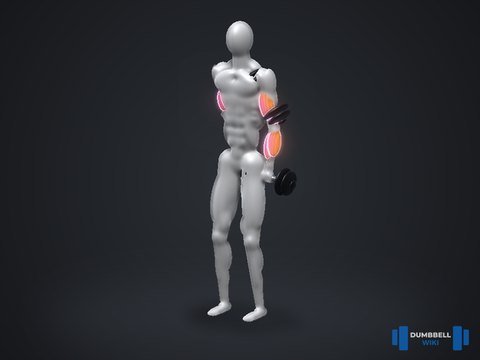

Dumbbell Radial & Ulnar Deviation
The dumbbell radial & ulnar deviation is a intermediate isolation exercise that mainly works the forearms.
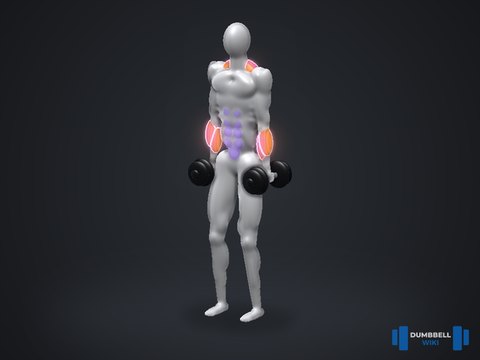
With the arm at your side, tilt a dumbbell up and down by bending the wrist toward the thumb (radial) or little finger (ulnar).
Also known as: Dumbbell Ulnar Deviation
Primary musclesForearms
Secondary muscles—
Level · TypeIntermediate · Isolation
EquipmentLight dumbbell (or one end loaded)
Suggested volume: 3 sets of 12–15 reps per side
 Coming soon3D exercise demo
Purpose of the dumbbell radial & ulnar deviation
Radial and ulnar deviation train the wrist side-to-side. That strengthens the muscles that stabilise the wrist for racket sports, climbing and lifting.
How to do the dumbbell radial & ulnar deviation: step by step
- Stand with your arm at your side holding a dumbbell by one end, thumb forward.
- Keep the arm still.
- Tilt the dumbbell up toward your thumb side (radial deviation).
- Lower slowly.
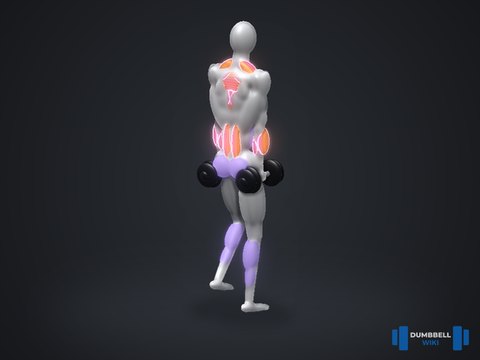
- For ulnar deviation, hold the dumbbell behind you and tilt up toward the little-finger side.
Dumbbell Radial & Ulnar Deviation benefits
- Builds wrist stability
- Strengthens side-to-side wrist control
- Supports sport performance
- Useful in rehab
Common dumbbell radial & ulnar deviation mistakes
- Moving the arm
- Too heavy
- Fast reps
Dumbbell Radial & Ulnar Deviation progressions
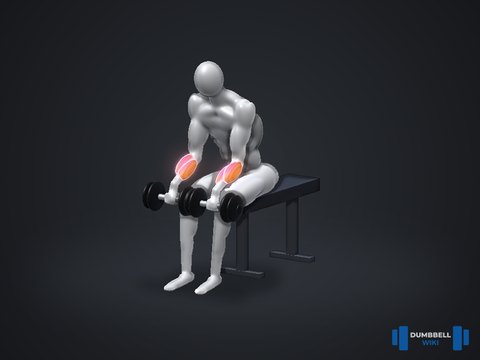
- Easier: new to this movement? Start with the dumbbell farmer's hold and seated dumbbell wrist curl.
- Harder: once you own the dumbbell radial & ulnar deviation, progress to the dumbbell bottoms-up hold and dumbbell wrist roller variation.
- See all dumbbell forearm exercises.
Dumbbell Radial & Ulnar Deviation FAQs
Radial vs ulnar deviation?
Radial bends toward the thumb, ulnar toward the little finger. Train both.